Pressure is a tool, not a complete recommendation
Pressure washing uses mechanical force to detach soil from compatible surfaces. It can help on durable areas when pressure, distance, angle, nozzle, water volume, and runoff are controlled. The same force can erode soft mortar, drive water behind failed sealants, lift paint, mark concrete, damage EIFS, disturb a coating, or push soil deeper into porous material. A facade that looks bright immediately afterward is not proof that the method suited the building or that vulnerable joints and openings were protected.
Soft washing generally shifts more of the work to compatible chemistry and controlled dwell time, followed by a lower-pressure rinse suited to the substrate. That can be useful for algae, mildew, light organic growth, and atmospheric film. It is not a universal answer for oxidation, rust, hard-water scale, efflorescence, chewing gum, graffiti, construction residue, oil, or damaged material. The right question is which combination of chemistry, pressure, dwell, agitation, rinse, access, and protection can improve the specified area without creating a larger maintenance problem.
Match the method to Peoria materials and conditions
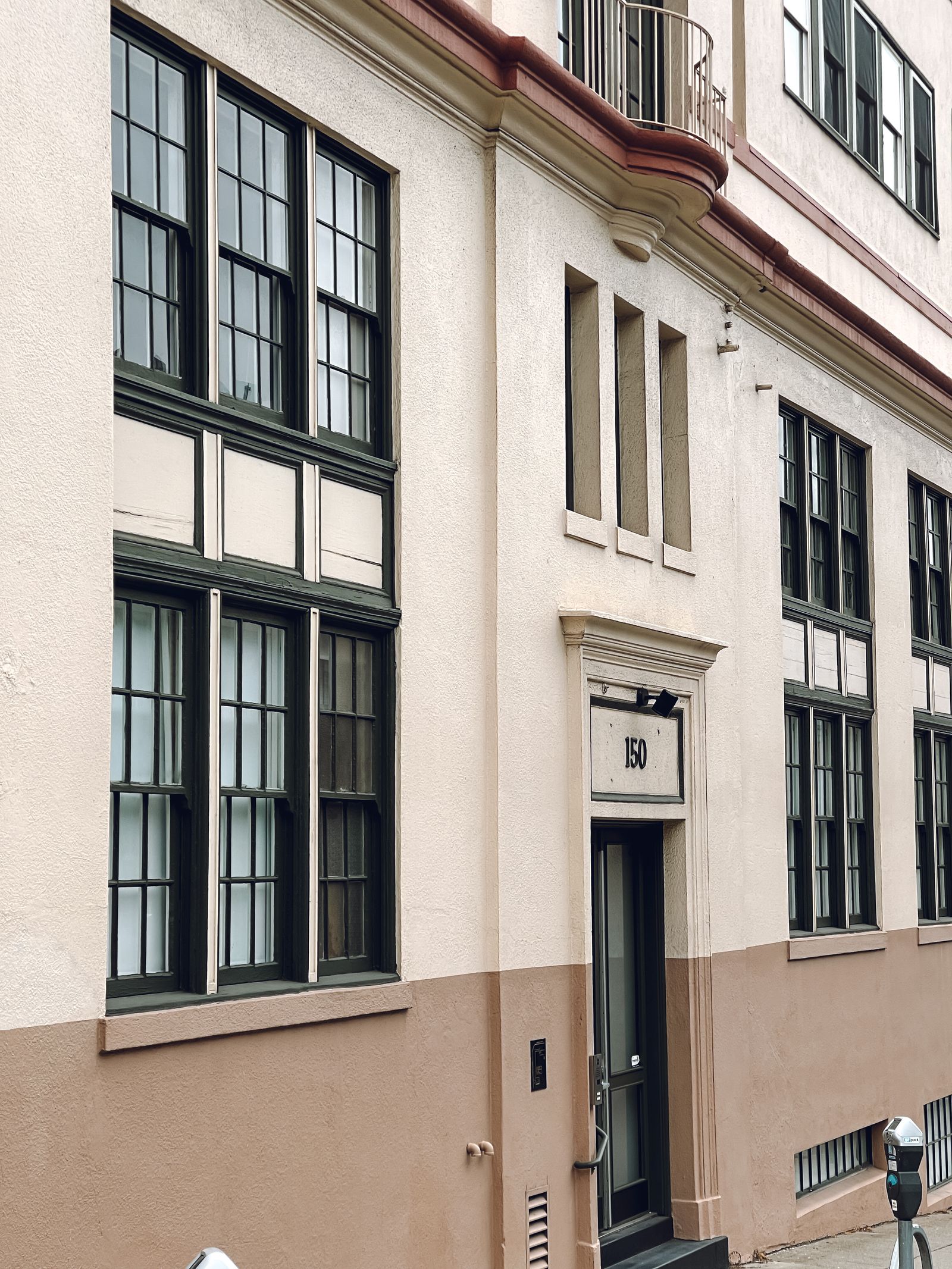
Brick and masonry require attention to mortar condition, porosity, historic repairs, soot, salt, and efflorescence. Precast concrete may show traffic film, algae, form marks, or repairs. Glass may need separate treatment for mineral spotting, construction debris, or sealant residue. Painted metal can show oxidation or coating failure that cleaning reveals but does not fix. EIFS and stucco have different limits from a loading-dock slab or a durable service wall. A Downtown storefront, Bradley-area office, East Peoria retail facade, and industrial building should not receive one assumed pressure setting or one chemistry profile.
The same property may need more than one method. A lower concrete wall could receive a controlled rinse, an organic mark on shaded masonry could receive soft-wash chemistry, entry glass could need low-pressure detail, and a bonded mineral deposit could require specialty treatment. A test area is useful when the stain, finish, or material response is uncertain. The proposal should identify the method by zone and say what improvement is expected, what may remain, and which repairs or specialty scopes are excluded.
- Ask which material receives chemistry, pressure, agitation, contact detail, or a specialty process.
- Confirm how joints, coatings, glazing, signs, air intakes, landscaping, and equipment will be protected.
- Separate cleaning from repair, restoration, coating replacement, and envelope investigation.
- Use a test area when the deposit or material response cannot be predicted from photographs.
Treat river moisture, salt, and freeze-thaw as part of the comparison
Riverfront and shaded elevations may retain moisture longer, while open corners and upper walls can dry or receive wind-driven spray differently. Spring pollen can add film to ledges and canopies. Lower facades near parking, bridges, loading areas, and high-traffic roads may carry deicing salt, brine, mud, and vehicle residue. Salt and mineral deposits do not respond like algae or mildew. Simply increasing pressure may move residue into joints or drains while leaving oxidation, efflorescence, or a damaged coating visible.
Freeze-thaw movement makes open joints, chipped concrete, failed sealants, and loose coatings worth identifying before a large rinse. The method decision should include the season, temperature, precipitation, wind, surface moisture, drying time, pedestrian conditions, and the expected water path. The crew should pause when weather makes the controlled area unsafe or when the building condition differs from the assumptions. A responsible quote sets a weather window and states how changed conditions affect the schedule and finish expectations.
Compare access methods before increasing pressure
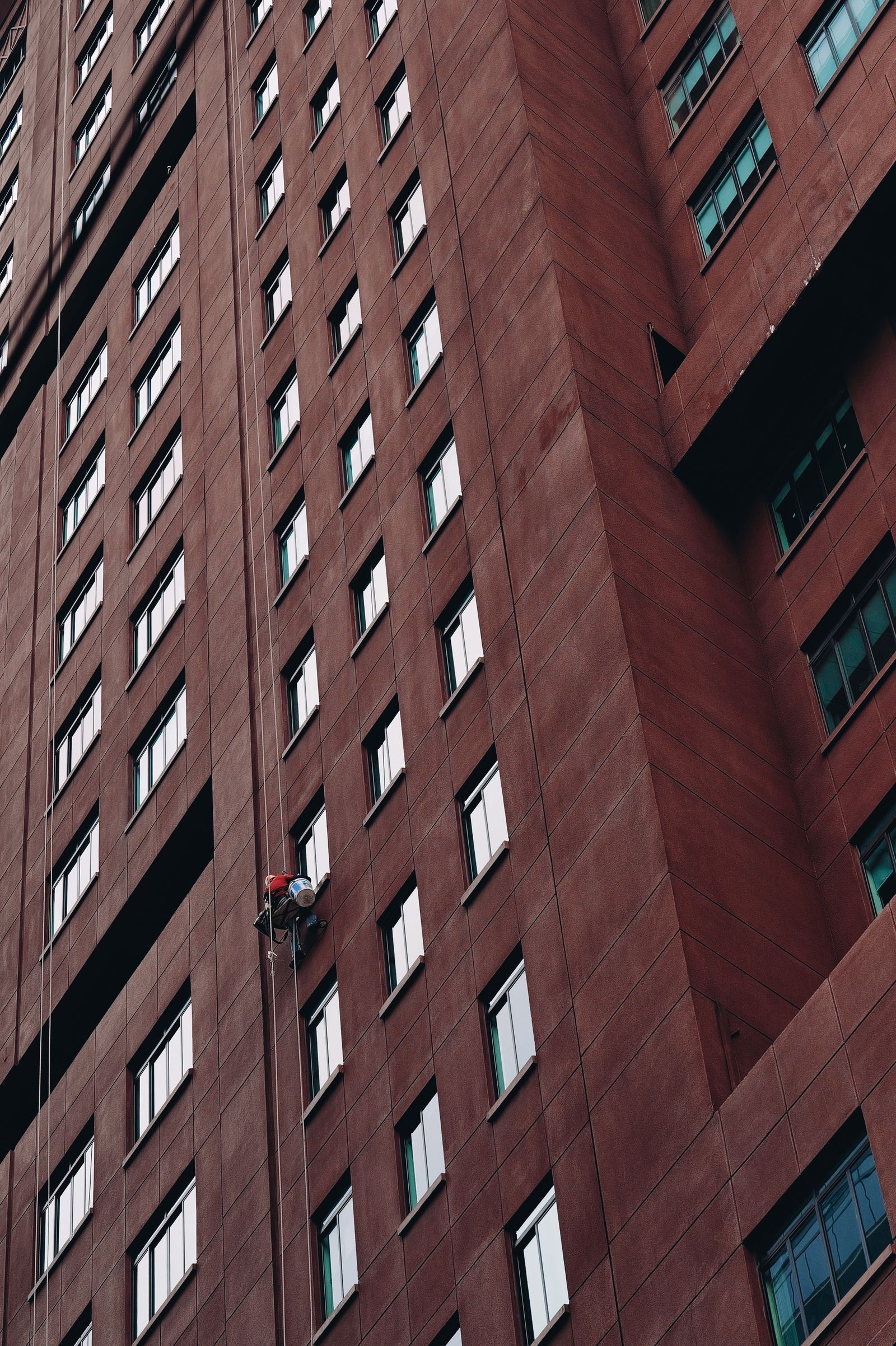
Ground-based work can address lower walls, but upper floors introduce access and safety decisions. A lift may be appropriate when close contact and detailed finish are needed. A water-fed pole may suit selected glazing or lower-risk areas. Drone assistance may support specific upper elevations when Peoria wind, wires, trees, adjacent structures, launch space, line of sight, airspace, and separation from people support it. A drone does not remove the need for a ground crew, controlled perimeter, water management, inspection, or a different method on delicate details.
Downtown sidewalks, Warehouse District alleys, Bradley-area pedestrian traffic, East Peoria parking lots, industrial receiving yards, and riverfront activity all change during the day. The access plan should state how customers, tenants, students, employees, vehicles, deliveries, and emergency routes will be handled. It should also identify who can pause work and what happens if a route becomes busy. If aerial access is not practical for a corridor or elevation, the proposal should price the viable lift, pole, hand-detail, or phased alternative instead of treating drone support as universal.
Make drainage and operating risk visible
The cleaning method affects more than the wall. Water and loosened soil can move into storm inlets, floor drains, planted beds, pavement joints, loading areas, doors, air intakes, electrical equipment, and neighboring property. Before choosing soft washing or pressure washing, locate low points, drainage features, hose routes, water access, public paths, vehicles, and sensitive equipment. Protection, diversion, reduced flow, collection, recovery, or another control may be appropriate depending on the site. The visible drain below the facade does not by itself answer whether the planned water path is acceptable.
Peoria facilities should also compare work hours, tenant or customer notices, deliveries, parking, events, outdoor seating, accessible routes, and closeout documentation. A method that looks efficient at the wall may be impractical if it blocks a loading lane or sends water across a public walkway. A good proposal records the included elevations, controls, expected finish, weather limits, exclusions, and condition notes so the property team can compare scopes rather than comparing labels alone.
Use a site-specific method recommendation
A useful Peoria method comparison should include the address, facade materials, visible conditions, priority areas, test plan, chemistry assumptions, pressure or rinse approach, access equipment, water source, drainage controls, pedestrian and vehicle controls, work hours, weather limits, exclusions, and closeout records. It should distinguish a maintenance wash from a visible improvement before an event, a phased facade reset, recurring service, glass detail, salt or mineral treatment, graffiti work, coating work, and repair recommendations.
Send photos from each elevation, approximate height, material information, visible deposits, water access, and the operating details that affect the work. Mention whether the property is Downtown, in the Warehouse District, near Bradley, in East Peoria, or part of an industrial or logistics corridor. Use the contact route to request a quote and describe the result that matters most. A property-specific review can determine whether soft washing, controlled pressure, hand detail, a lift, a water-fed pole, drone assistance, or a combination is the sensible path.